Preventing Pressure Ulcers Through Advanced Patient Repositioning
Anyone exposed to pressure ulcers understands the pain and agony associated with them. Preventing bedsores is simple in principle but difficult to implement in practice. It requires frequent repositioning to restore blood flow to tissues where circulation has been reduced due to pressure from the body's own weight. However, repeatedly repositioning an individual who needs it is a strenuous task. It cannot be done by a single person in home-care settings, and it causes back injuries to nurses in nursing homes and hospitals who must reposition several individuals — some of whom are overweight — every 2 hours.
ROBE is an advanced, patented, automated patient repositioning system that performs this task effortlessly, gently, and safely — thereby reducing caregiver workload.
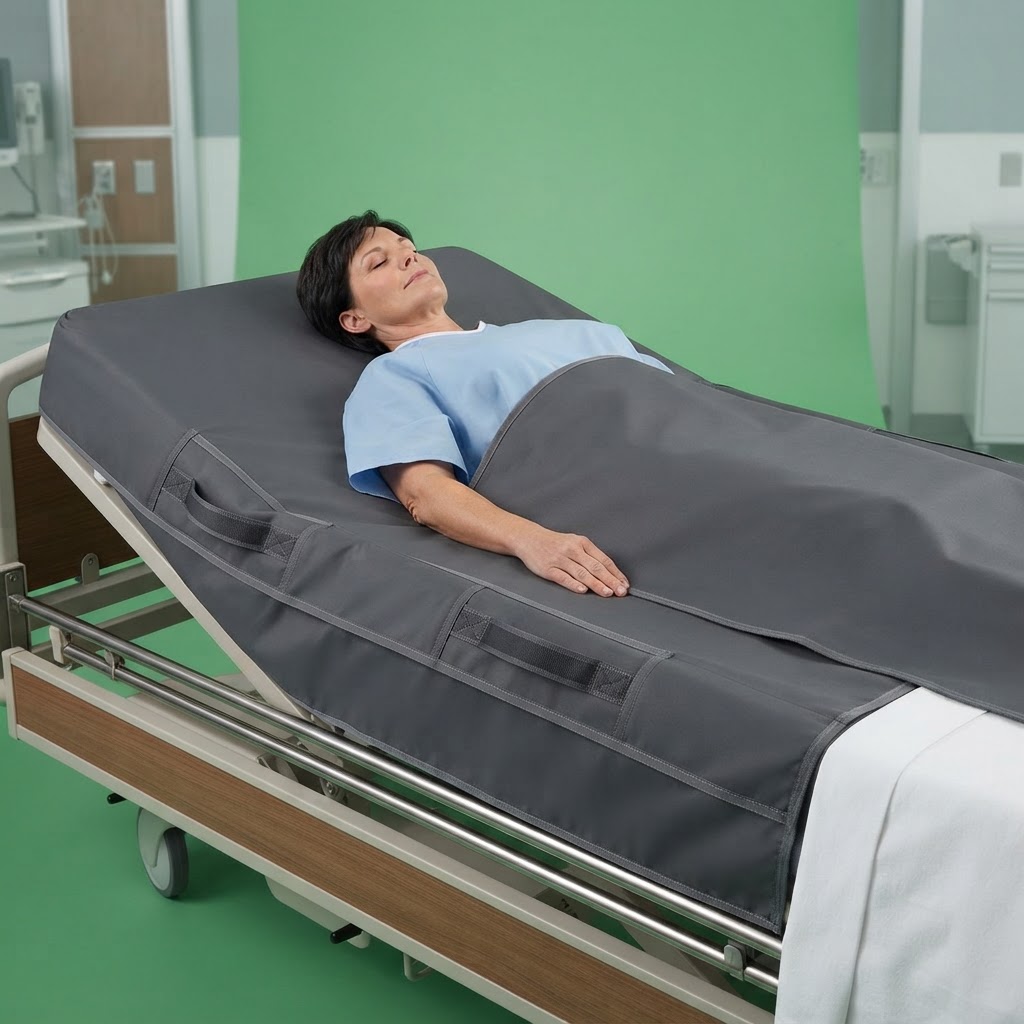
Bedridden patients require frequent repositioning to prevent pressure injuries
Pressure injuries are largely preventable — yet, as a result of strenuous work and insufficient supervision, current protocols are broken, putting patients and caregivers at serious risk.
"Pressure ulcers affect more than 1 in 10 adult patients admitted to hospitals and, despite being highly preventable, they have a significant impact on the mental and physical health of individuals, and their quality of life. If not promptly managed, they can have fatal complications."
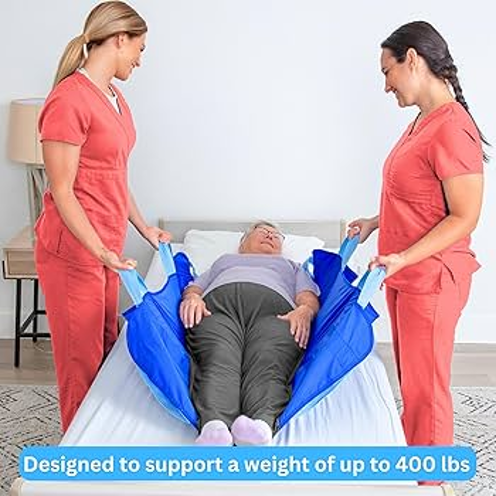
Two nurses required for every repositioning — repeated 4× per shift, per patient
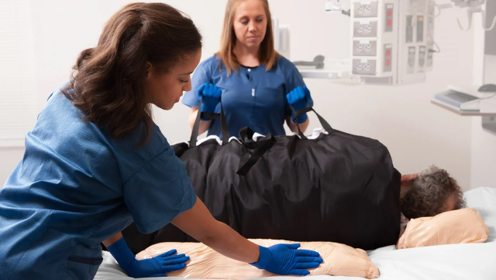
Manual transfer with a slide sheet — physically demanding and injury-prone
The current reality in hospitals and care facilities: manual repositioning is a two-person job, performed around the clock.
Addressing Patient Risks
- Only 40% of patients needing repositioning are treated appropriately
- More than 2.5 million people in the US develop pressure injuries every year
- ~60,000 patients in the US die as a direct result of a pressure injury every year
Reducing Healthcare System Economic Burden
- Annual costs to the US healthcare system related to pressure injuries: $9–11.6 billion
- Individual patient care cost per pressure injury: $21,000–$152,000
- More than 17,000 lawsuits related to pressure injuries are filed in the US every year
The Hidden Cost: Nursing Staff Injury
A systemic workforce crisis hiding in plain sight
of nurses suffer at least one work-related back injury during their career
annual cost of nurse musculoskeletal injuries to the US healthcare system
higher injury rate compared to the average US worker — nurses are among the most at-risk professions
Repositioning a bedridden patient requires two nurses lifting and turning a person who may weigh over 100kg — repeated 4 times per shift, per patient, around the clock. This is not just inefficient: it is physically destructive. ROBE eliminates this entirely, protecting both patients and the healthcare workforce.
Why Caregivers Struggle — and Patients Suffer
Repositioning a bedridden patient requires significant physical effort — and must be performed every two hours, around the clock. With multiple patients per nurse, the cumulative strain leads to musculoskeletal injuries, burnout, and staff shortages. Over 80% of caregivers report at least one work-related back injury during their careers.
Under time pressure, understaffing, and physical exhaustion, caregivers are forced to cut corners. Night shifts are particularly vulnerable — with fewer staff and higher fatigue, repositioning schedules are frequently delayed or skipped entirely, leaving patients unprotected for extended periods.
When repositioning is not performed consistently, pressure builds on bony prominences, cutting off blood flow to the skin. Within hours, tissue damage begins. Left untreated, pressure injuries progress rapidly — causing severe pain, infection, prolonged hospitalization, and in the most serious cases, death.
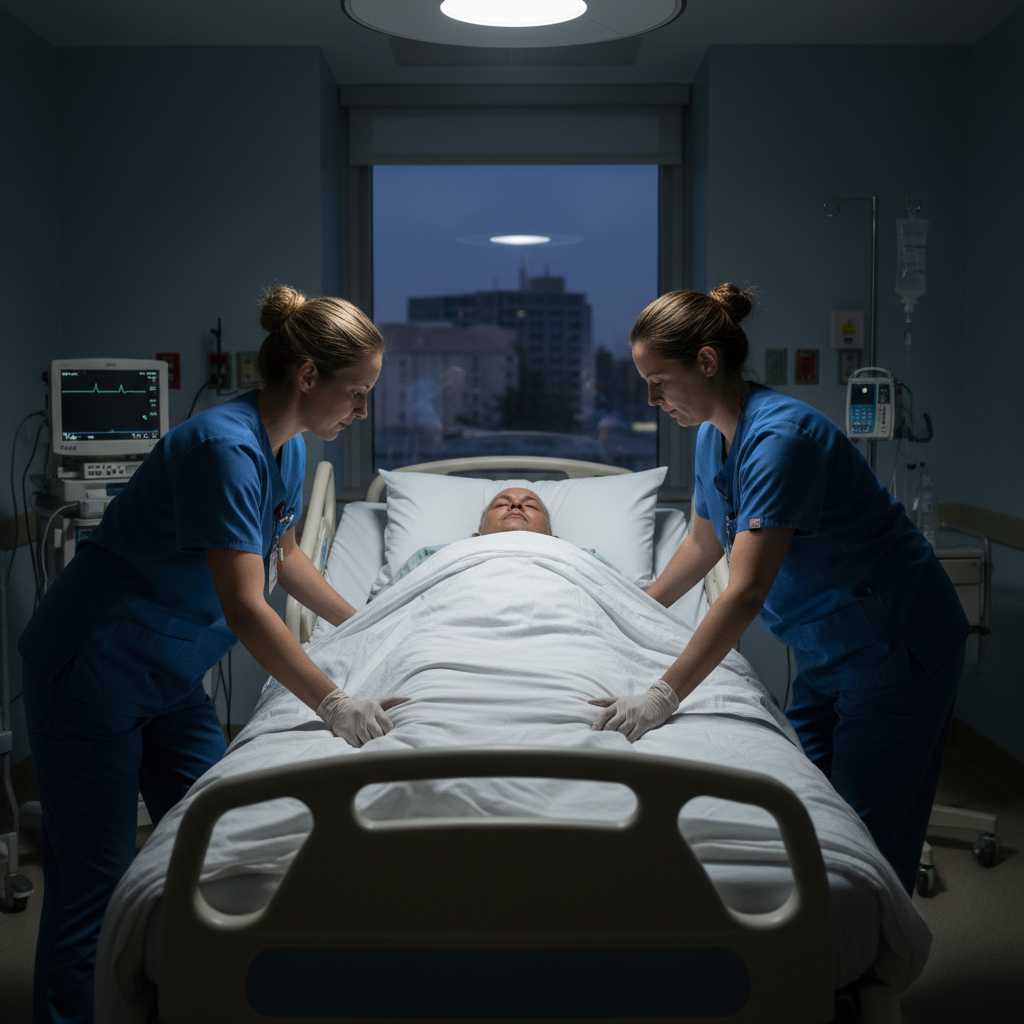
Manual repositioning: labor-intensive, risky, and unsustainable
Challenges with Current Protocol
Requires turning at 2-hour intervals — 4 times per shift, per patient
No solution for overweight patients
80% of caregivers report at least 1 back injury during their career
Some caregivers cut corners under pressure
No solution for home care of bedridden patients
Presenting ROBE
A revolutionary automated repositioning system that safely turns patients at regular intervals — protecting both patients and caregivers.
What is ROBE?
ROBE is an advanced, patent-pending, automated repositioning system that prevents bedsores safely, effortlessly, and gently.
- ROBE can be integrated into or added on to any bed — hospital beds, nursing-home beds, or home-care beds
- Effective, gentle, and safe — slowly rolling the individual while safeguards are in place, with no abrupt swinging motion. Repositioning angles can be set across a wide range, accommodating patient-specific limitations such as surgical wounds, catheters, and more.
- Effortless — at the touch of a button, ROBE replaces the hard work of the 2 nurses required by the standard care protocol
- Digital care log for supervisors
- FDA exempt pathway applicable
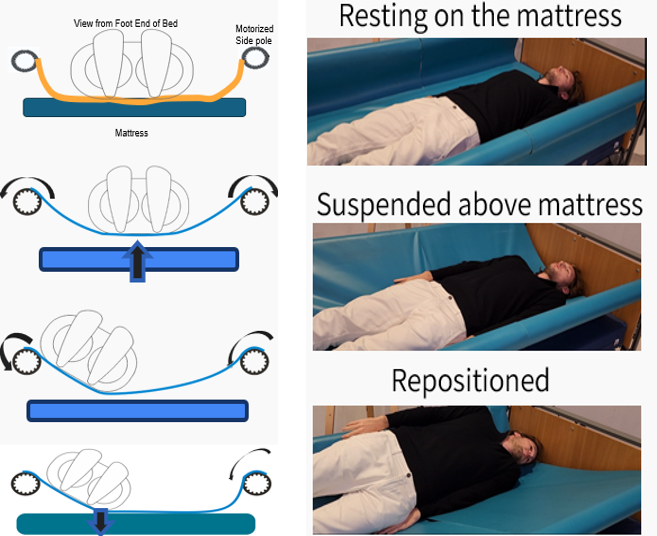
Patient lies flat, supported by the ROBE sheet across the mattress.
Motorized side poles lift the sheet, raising the patient gently off the bed.
One pole rotates to tilt the sheet, turning the patient safely onto their side.
How Does It Work?
Setup
Simple installation and configuration — works as an add-on to any existing bed or as a fully integrated system.
Posture Adjustment
Configure a customized repositioning program tailored to the patient's medical profile and needs.
Repeated Repositioning
The system automatically repositions the patient at preset intervals — no manual intervention required.
Advanced Features
Next-generation planned capabilities are expected to include:
See ROBE in Action
A live demonstration of the ROBE system in operation.
Better Outcomes for Everyone
For Medical Institutions
Operational Cost Savings
- Manpower savings
- Reduced liability
- Increased efficiency
- Enhanced reputation
Versatile Utilization
- Pressure injury prevention
- During recovery from orthopedic surgery (e.g., knee or hip replacement)
- Assisting rehabilitation
- ICU — preventing bedsores and pulmonary edema
- Bariatric assistance
- Emergency room — gentle injury assessment
Reduced Staff Burden
- Reduces physical strain on healthcare workers
- Minimizes work-related injuries
For Patients
Better Care
- Frequent repositioning
- Improved safety
- Greater comfort
- Saves hospitalization time
Patient Independence
- Accessible and affordable home care
- Assistance with position adjustments
Personalized Data-Driven Care
- Responds to continuous monitoring
- Customized treatment programs
ROBE vs. Current Practice
Why Invest in ROBE
Proven progress, strong IP, a $4.6B growing market — and a pre-seed round now open.
North America & Europe Market Growth
Projected market value ($B) · 6% CAGR · 7.5M addressable beds in the US alone
ROBE Revenue Targets (US)
Development Timeline — Proven Progress
Concept & IP Filing
Initial patent application filed. Concept validated by medical advisors.
PCT Approval
All patent claims approved in PCT international phase.
Innovation Grant
Israel Innovation Authority competitive grant awarded.
Working Prototype
Fully functional add-on prototype completed and demonstrated.
Hospital Pilots
Live demonstrations at major Israeli medical centers. Letters of Intent received.
Clinical Trial — Sheba
Clinical trial underway at Sheba Medical Center, Neurological Rehabilitation Dept. (Ramat Gan). Additional rehab centers awaiting trial units: Beit Levinstein, Beit Re’ut, Beit Hadar, and Bnei Zion Hospital Rehab Dept.
Pre-Seed Round
Raising pre-seed capital to scale manufacturing, supply trial units to awaiting rehabilitation centers, and enter US/EU markets.
IP & Regulatory Status
US & EU Patent Assessment
Strong IP position confirmed — patentability assessment completed
PCT All Claims Approved
International patent in national phase — broad protection secured
FDA Exempt Pathway
Regulatory consultation confirmed — faster path to US market
Israel Innovation Authority
Competitive R&D grant secured — validates technology
Seeking Pre-Seed Investors
We are raising a pre-seed round to scale manufacturing, complete CE/FDA clearance, and enter the US and European markets.
Experienced Team. Proven Execution.
Deep expertise across medical devices, engineering, global business development, and clinical validation.

David Freidenberg
Co-Founder & CEO
- Senior executive with 25+ years leading global telecom, IT, and technology companies
- CEO and Board member of U.S. corporations, with deep expertise in strategy, operations, and global market expansion
- Proven expertise in capital raising, venture funding, and building investor-ready companies from early stage to public markets

Manfred Grumberg
Founder & CTO
- 45+ years developing complex, multidisciplinary engineered medical and technological solutions
- Serial inventor — 5 granted patents including medical devices
- Expertise in system engineering and project management at RAFAEL and IMI
Advisory Board
Boaz Dovrin
Advisory Board
Experienced VP and program manager in medical device companies. 35 years developing complex, multidisciplinary products.
Cliff Ansel
Advisory Board
Strategic Advisor. Co-Founder and CEO of Thornhill Medical. Former CEO of Respinova Ltd.
Dr. Nissim Ohana, M.D.
Medical Advisory Board
Head of Orthopedic Department at Meir Medical Center. Clinical validation partner.
Request Information
Interested in ROBE for your facility or as an investor? We'd love to hear from you. Our team responds within one business day.
Email Us
info@robe-care.com
Medical Institutions
Hospitals, nursing homes, rehabilitation centers, and home care providers
Investors & Partners
Seeking pre-seed investors and strategic distribution partners in the US and EU
Clinical Collaborators
Open to pilot programs and clinical study partnerships